Topics (384k) Articles (398k) Users (410) Discussions (242) Comments (383) Files (13k) New article

A. Gow is the first author of a 1999 study testing the function of Claudin-11 in myelin and between Sertoli cells. Mice lacking the corresponding gene had slowed nerve conduction and reproductive abnormalities. Freeze-fracture microscopy showed the absence of characteristic tight junction strands in the affected membrane structures.[ref]
The structural observation narrows the interpretation of the whole-animal changes: a defined membrane component was missing where a particular junctional pattern normally occurs. Absence of those tight junction strands should not be read as absence of all myelin. Combining molecular deletion, microscopy and physiological measurements connected Claudin-11 with junction formation in two different tissue settings.[ref]
CNS myelin and Sertoli cell tight junction strands are absent in Osp/claudin-11 null mice by A. Gow and others. Abstract: myelin/Sertoli junctional strands and neurological/reproductive phenotypes
D. Taglicht is the first author of a 1993 measurement of the transport stoichiometry of NhaA, an antiporter from Escherichia coli. Purified NhaA was reconstituted into sodium-loaded proteoliposomes, allowing transport to be studied in a defined membrane preparation.[ref]
Two approaches converged on two protons exchanged for each sodium ion over the tested pH interval –. One compared opposing ion fluxes; the other related the membrane potential to imposed concentration gradients under coupling and equilibrium assumptions.[ref]
The ratio explains the word electrogenic: moving two singly positive ions one way and one singly positive ion the other transfers a net unit of positive charge per completed exchange cycle. It also separates a transporter's rate from its stoichiometry: faster exchange need not mean a different number of ions per cycle.
M. D. Pierschbacher coauthored a 1984 experiment localizing a cell-attachment activity of fibronectin to a short peptide. With E. Ruoslahti, M. D. Pierschbacher showed that a synthetic four-residue sequence could reproduce the measured attachment-promoting activity.[ref]
The sequence comprises arginine, glycine, aspartate and serine, often written RGDS. The experimentally tested four-residue peptide should be distinguished from the embedded RGD motif and from the entire fibronectin molecule.[ref]
The experiment converts a broad observation into a molecular question. A large protein can contain many functional regions; a synthetic fragment tests whether one specified sequence is sufficient for a particular assay response. Reproducing that response does not establish that the fragment reproduces every function of fibronectin.
E. Ruoslahti coauthored, with M. D. Pierschbacher, a 1984 study showing that a short synthetic peptide could reproduce a measured cell-attachment activity of fibronectin. This connected cell adhesion to a specified part of a protein sequence.[ref]
The tested peptide contained arginine, glycine, aspartate and serine. Finding activity in a defined fragment supplied a way to ask which features of the original fibronectin molecule were needed for that particular interaction.[ref]
An illuminating comparison is between recognition and the complete biological task. A small fragment can retain an attachment signal while lacking the size and other binding regions of the original protein. Localizing a recognition sequence therefore does not reduce every property of the original molecule to that sequence.
M. Desjardins is a coauthor of a 1994 experimental study of how a phagosome becomes a phagolysosome. The researchers followed phagosomes containing latex beads in macrophages, isolating these compartments by density-gradient centrifugation and measuring changes in their proteins. The beads supplied a physical handle for recovering compartments formed around ingested material.[ref]
Biogenesis of phagolysosomes proceeds through a sequential series of interactions with the endocytic apparatus by M. Desjardins and others. Abstract and Materials and methods: bead-containing phagosome preparation.
The study found successive exchanges with the endocytosis system rather than a single instantaneous conversion. Changes in membrane markers, together with microscopy, made phagosome maturation observable as a process. An illuminating comparison is to follow the same class of bead-containing phagosomes shortly after ingestion and later: both contain beads, but their protein composition differs. Thus counting engulfed particles measures one part of phagocytosis, while examining their surrounding compartments reveals subsequent maturation.[ref]
Biogenesis of phagolysosomes proceeds through a sequential series of interactions with the endocytic apparatus by M. Desjardins and others. Results, Figures 5–7: acquisition of endocytic markers and time-dependent maturation.
Dmitri Volfson has studied how the growth and physical interactions of cells produce collective organization. He is a co-first author of a 2008 study connecting expansion of dense bacterial colonies with orientational alignment of rod-shaped Escherichia coli.[ref]
Biomechanical ordering of dense cell populations by Dmitri Volfson and others. Title page, Abstract and equal-contribution note
The experiment followed cells growing in a microfluidics-based chemostat. As the population expanded under confinement, its spatial order changed. A continuum mathematical model and simulations of individual interacting cells helped relate the observed alignment to growth, division and mechanical contact.[ref]
The scientific contribution is a connection between individual growth and a measurable population pattern. A useful original interpretation example is a collection of rods pointing equally in opposite directions along one line: their arrows can cancel in a vector average even though their long axes are aligned. A measure of rod orientation must distinguish this alignment from an isotropic arrangement.
Cahir J. O'Kane is a geneticist whose work includes developing enhancer trap experiments in Drosophila melanogaster. His institutional account places that work during his postdoctoral period with Walter Jakob Gehring in Basel. The original 1987 paper's first-page byline gives Cahir J. O'Kane and Walter J. Gehring.[ref]
Professor Cahir O'Kane profile by Churchill College. biography, Basel postdoctoral work and enhancer trapping
[ref]Detection in situ of genomic regulatory elements in Drosophila by C. J. O'Kane and W. J. Gehring. PNAS 84, page 9123, original byline
The experiment used a P element to place a weak-promoter reporter gene in different genomic contexts. Beta-galactosidase activity provided a visible readout of reporter expression. About seventy percent of forty-nine transformed lines showed spatially regulated expression in embryos, demonstrating the method's ability to recover distinct regulatory patterns.[ref]
Detection in situ of genomic regulatory elements in Drosophila by C. J. O'Kane and W. J. Gehring. Abstract and Results, promoter/reporter design and transformed-line observations
A pattern is a starting point for a biological question. For example, a hypothetical reporter restricted to one tissue identifies a useful expression domain, but does not alone establish the full normal expression of a nearby gene or prove that only one enhancer caused the pattern. Additional mapping and comparisons address those questions.
O'Kane's Cambridge research profile also describes work on the organization of axonal endoplasmic reticulum in Drosophila neurons. It connects the geometry and continuity of this membrane network with cellular function.[ref]
Cahir O'Kane research profile by the Department of Genetics at Cambridge. first-person biography and Research Interests, axonal ER organization
Both research themes use an experimentally tractable model organism to turn a difficult cellular or regulatory property into an observable phenotype.Walter Jakob Gehring (1939–2014) was a developmental biologist at the University of Basel's Biozentrum, where he worked as a professor from 1972 to 2009. The institutional profile identifies him as Walter J. Gehring, and the Kyoto Prize's official record supplies the full name.[ref]
Walter J. Gehring emeritus profile by the Biozentrum. emeritus biography, role, dates and 2000 Kyoto Prize
[ref]With Cahir J. O'Kane, he coauthored the 1987 experiment introducing an enhancer trap approach in Drosophila melanogaster. A weak promoter drove a reporter gene at different genomic insertion sites. Spatially patterned reporter activity made otherwise unseen regulatory influences experimentally visible.[ref]
Detection in situ of genomic regulatory elements in Drosophila by C. J. O'Kane and W. J. Gehring. PNAS 84, 9123–9127, first-page byline, Abstract and experimental rationale
The important inference is about context. A reporter that behaves differently at two locations can reveal position-dependent gene regulation, while locating an insertion alone does not identify every responsible regulatory sequence. The method connects an observable pattern to a molecular search problem.
Gehring's wider work on conserved developmental mechanisms, including the homeobox, was recognized by the 2000 Kyoto Prize.[ref]
Walter Jakob Gehring laureate record by the Kyoto Prize. Achievement Digest and award citation
Together, these contributions connect two scales of explanation: regulatory activity can be detected in particular cells, while comparisons of developmental genes ask which features are shared across organisms.
Walter Jakob Gehring, portrait linked from his official Biozentrum emeritus profile
. External institutional portrait. Source: www.biozentrum.unibas.ch/emeriti-former-professors/emeriti/walter-j-gehring .Belgin Yalçın is a researcher whose work includes the organization of axonal endoplasmic reticulum. She was first author of the 2017 study connecting membrane-shaping proteins to the tubular endoplasmic reticulum network in Drosophila melanogaster axons.[ref]
The research combined different kinds of evidence. Fluorescence recovery after photobleaching investigated movement of a fluorescent marker, while electron microscopy examined the network's structure. Mutants lacking particular membrane-shaping proteins had larger, fewer tubules and occasional discontinuities. A functional imaging readout and a structural reconstruction therefore addressed related questions about the same compartment.[ref]
Modeling of axonal endoplasmic reticulum network by spastic paraplegia proteins by Belgin Yalçın and others. Figure 5 and Live imaging and FRAP; Figure 7 and Axonal EM analyses
An invented counting example illustrates why the unit of comparison matters. Suppose one animal has detected gaps in two of ten examined axons and another in eight of one hundred. The two animal-level fractions are and , with arithmetic mean . Pooling the axons instead gives . Neither calculation is an arithmetic mistake: they give different weight to the two animals. A biological interpretation must say whether animals or individual axons define the comparison.
This contribution helped relate membrane geometry to the maintenance of a long cellular extension. The presence, caliber and continuity of a tubular network are distinct observations, and a proposed physiological consequence requires evidence beyond a static image alone.[ref]
Modeling of axonal endoplasmic reticulum network by spastic paraplegia proteins by Belgin Yalçın and others. Discussion, structural phenotypes and proposed consequences

Belgin Yalçın
. Portrait explicitly identified in the Stanford Medicine Monje laboratory members page: med.stanford.edu/monje-lab/people.html . Her Stanford publication record lists the 2017 axonal ER paper: profiles.stanford.edu/belgin-yalcin .Donald C. Rio is a biochemist who studies DNA transposition and regulation of RNA splicing. His institutional biographies and P-element research record identify the scientist credited as D. C. Rio in the early experimental papers.[ref]
Donald C. Rio research profile at the National Academy of Sciences. Named member record and Biosketch, transposon mobilization and splicing regulation
Rio was first author of the 1986 study that connected an approximately P-element protein to transposase activity. The investigators used immunochemical detection to distinguish proteins associated with differently processed transcripts, then connected production of the larger protein to excision of a non-autonomous transposable element.[ref]
Identification and immunochemical analysis of biologically active Drosophila P element transposase by D. C. Rio and others. Abstract, transcript processing, protein identification and excision activity
The experiment addressed a recurring molecular question: finding a coding sequence or protein band does not yet establish a catalytic function. A prediction about the product of a transcript becomes stronger when the corresponding protein and an appropriate activity can be connected through independent measurements.
A constructed comparison illustrates how the observations differ. Two samples contain equal amounts of a messenger RNA, but one processes it into a form that yields an active enzyme and the other does not. Equal transcript abundance would not imply equal excision activity. Conversely, equal protein-band intensity would not prove equal numbers of completed DNA integration events. Each assay constrains a different step between transcript processing and a biological outcome.
Rio's research links those steps by combining biochemical measurements with genetic and structural approaches.[ref]
Donald C. Rio research profile at the National Academy of Sciences. Biosketch, biochemical purification and genetic assays of P-element splicing control
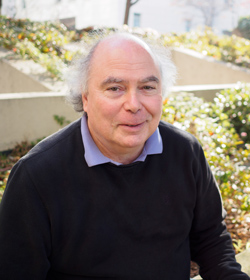
Donald C. Rio
. Portrait identified by the University of California, Berkeley faculty page, which describes his P-element and RNA-splicing research: mcb.berkeley.edu/faculty/GEN/riod.html .Alfred Day Hershey was a researcher in bacteriophage genetics. The Cold Spring Harbor Laboratory archive explicitly gives his full name and describes his collaboration with Martha Chase on the different roles of phage DNA and protein. His original A. D. Hershey byline remains a preserved name for the same person.[ref]
Alfred D. Hershey archive biography at Cold Spring Harbor Laboratory. Opening biographical paragraph and account of the Hershey–Chase work
The Hershey-Chase experiment combined chemical tracers with a physical separation. The archive describes phage protein being sheared from bacterial surfaces while much of the phage DNA remained with the bacteria. The original paper further compared transfer of parental labels to progeny: less than of parental sulfur label versus or more of parental phosphorus label was recovered there.[ref]
Alfred D. Hershey archive biography at Cold Spring Harbor Laboratory. Historical experiment account
[ref]Independent functions of viral protein and nucleic acid in growth of bacteriophage by A. D. Hershey and Martha Chase. Summary point 6: label transfer to progeny
An original two-component model shows why selective labelling and measurement controls matter. Suppose component A has a measured retention fraction and component B has . If a mixed preparation contains an unknown A-associated fraction of its label, then ideal retention isAn observed would implyThis is an illustrative tracer model, not a reanalysis of the 1952 data. It assumes that the label tracks the components faithfully, the end-member fractions are known, and recovery does not depend on an unmodelled third component. If , the denominator vanishes: retention cannot distinguish the components at all.
The point is methodological. Separating material and measuring radioactivity provide evidence only through a defined relation between the tracer and the biological question. Labelled atoms are not themselves a count of functional genomes or a direct measurement of genetic information. Hershey's credited work is significant because physical, chemical and biological observations were brought into a common argument about heredity.

Martha Chase was a researcher and coauthor, with Alfred Day Hershey, of the 1952 study now known as the Hershey-Chase experiment. Their work asked how the DNA and protein components of Bacteriophage T2 participated in infection and production of new phage particles.[ref]
Independent functions of viral protein and nucleic acid in growth of bacteriophage by A. D. Hershey and Martha Chase. Published byline, Introduction and Summary
The experiment used isotope labelling to follow the components separately: phosphorus-32 traced phage DNA, while sulfur-35 traced sulfur-containing phage protein. A Waring blender supplied a mechanical shearing step, and centrifugation separated the bacterial fraction from detached material. Most sulfur label was stripped away while most phosphorus label remained associated with the cells, which could still produce progeny.[ref]
Independent functions of viral protein and nucleic acid in growth of bacteriophage by A. D. Hershey and Martha Chase. Printed pages 50–53, blender experiment; Summary points 4–5
A useful way to understand the apparatus is to separate its two jobs. Blending changes which material remains attached to bacteria; centrifugation sorts material into a centrifugation pellet and supernatant. Neither operation directly reads a genetic message. The inference depends on following the labelled chemical components through that physical separation and comparing the results with biological activity.
For an invented recovery example, suppose corrected measurements find label units in the centrifugation pellet and in the supernatant. The recovered pellet fraction is . If the initial sample contained comparable units, however, only of the initial label has been recovered. Calling the pellet result of the initial label would confuse two denominators: it is of that initial amount. These numbers are not reported experimental data. They illustrate why recovery, background and the definition of the measured fractions matter when interpreting a tracer experiment.
The study supplied evidence connecting DNA with phage propagation while distinguishing an external structural role for much of the phage protein. It did not establish that every virus uses DNA or that proteins have no biological role in infection.
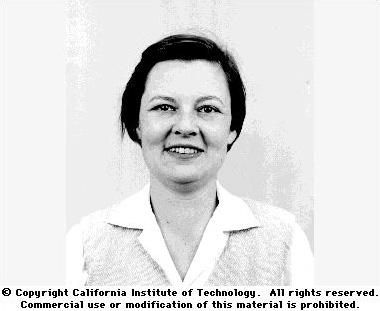
Martha Chase
. Individual portrait identified as Martha Epstein Chase by the Cold Spring Harbor Laboratory DNA Learning Center archive. Original named archive record.Yuan Zhuang coauthored a 1986 study with A. M. Weiner that used a compensatory base change to investigate RNA splicing. Duke's institutional publication record explicitly connects the initial-only byline Y. Zhuang to Yuan Zhuang.[ref]
A compensatory base change in U1 snRNA suppresses a 5′ splice site mutation by Y. Zhuang and A. M. Weiner. Author identity panel and published byline
The experiment compared altered splice donor sites with altered U1 small nuclear RNA. In cells receiving the corresponding constructs, one compensating combination strongly restored donor use, whereas another gave very weak rescue. These observations supported direct base pairing but showed that matching the two RNA sequences was insufficient to guarantee productive RNA splicing.[ref]
A compensatory base change in U1 snRNA suppresses a 5′ splice site mutation by Y. Zhuang and A. M. Weiner. Abstract: paired perturbations and unequal suppression at the two tested donors
For an original quantitative illustration of rescue, suppose a hypothetical assay measures a processed fraction of in a reference, after one perturbation and after a compensating perturbation. The fraction of the lost response recovered would beThat is approximately recovery of the loss, despite a final processed fraction of . These invented numbers illustrate why absolute processing and recovery relative to a reference answer different questions; they are not measurements from the paper.

Yuan Zhuang, portrait linked from Duke's named institutional profile
. [ref]Yuan Zhuang institutional profile at Duke. Named profile and portrait
A. M. Weiner is a credited coauthor, with Yuan Zhuang, of a 1986 experimental study of RNA splicing. The study tested whether base pairing between U1 small nuclear RNA and a precursor RNA's splice donor site contributes directly to recognition. A compensating change in one partner could rescue a change in the other, supporting a specific molecular interaction.[ref]
A compensatory base change in U1 snRNA suppresses a 5′ splice site mutation by Y. Zhuang and A. M. Weiner. Published byline and abstract: compensatory suppression as a test of donor recognition
The reasoning goes beyond observing that a damaged RNA fails to undergo RNA splicing. In an original schematic example, imagine a compatible pair of sequence features . Either or disrupts their interaction, while restores compatibility. Recovery in the double change supports a pairing explanation more specifically than failure after either single change. This is the logic of a suppressor mutation, not a claim that the compensating molecule restores every other property of the original system.
The paper also reported unequal rescue at two splice donor sites. Thus restored nucleic acid complementarity did not invariably restore productive RNA splicing. Recognition by U1 snRNP has to cooperate with the rest of the spliceosome, making this experiment informative about both a required interaction and its limits.[ref]
A compensatory base change in U1 snRNA suppresses a 5′ splice site mutation by Y. Zhuang and A. M. Weiner. Abstract: efficient suppression at one donor and exceedingly weak suppression at the other; base pairing necessary but insufficient
Martin Jinek coauthored a 2011 study explaining how Xrn1 recognizes an RNA end and couples hydrolysis to continued processing. The X-ray crystallography experiment used a truncated, catalytically altered construct bound to DNA; complementary biochemical experiments tested RNA degradation.[ref]
Coupled 5′ nucleotide recognition and processivity in Xrn1-mediated mRNA decay by Martin Jinek and others. Byline; Results, construct and substrate-complex structure
This pairing of methods matters: a bound nucleic-acid segment can reveal contacts near an active site, while a degradation assay tests chemical function. Neither a static structure nor a single product measurement independently reveals every step in motion.
For an original structural example, take two hypothetical RNA-DNA hybrids with the same paired positions but different unpaired RNA extensions of and nucleotides. The RNA strands contain and nucleotides, respectively, while both DNA partners contain . Equal paired-region length therefore does not mean equal accessibility of the end. This accounting illustrates a way of separating paired structure from end geometry, not the actual substrate dimensions used in the paper.
Jinek was also a coauthor of the 2012 demonstration of programmable Cas9 cleavage, together with Jennifer A. Doudna and other collaborators. That work connected guide RNA recognition with targeted DNA cleavage and showed that the guide functions could be combined in one RNA molecule.[ref]
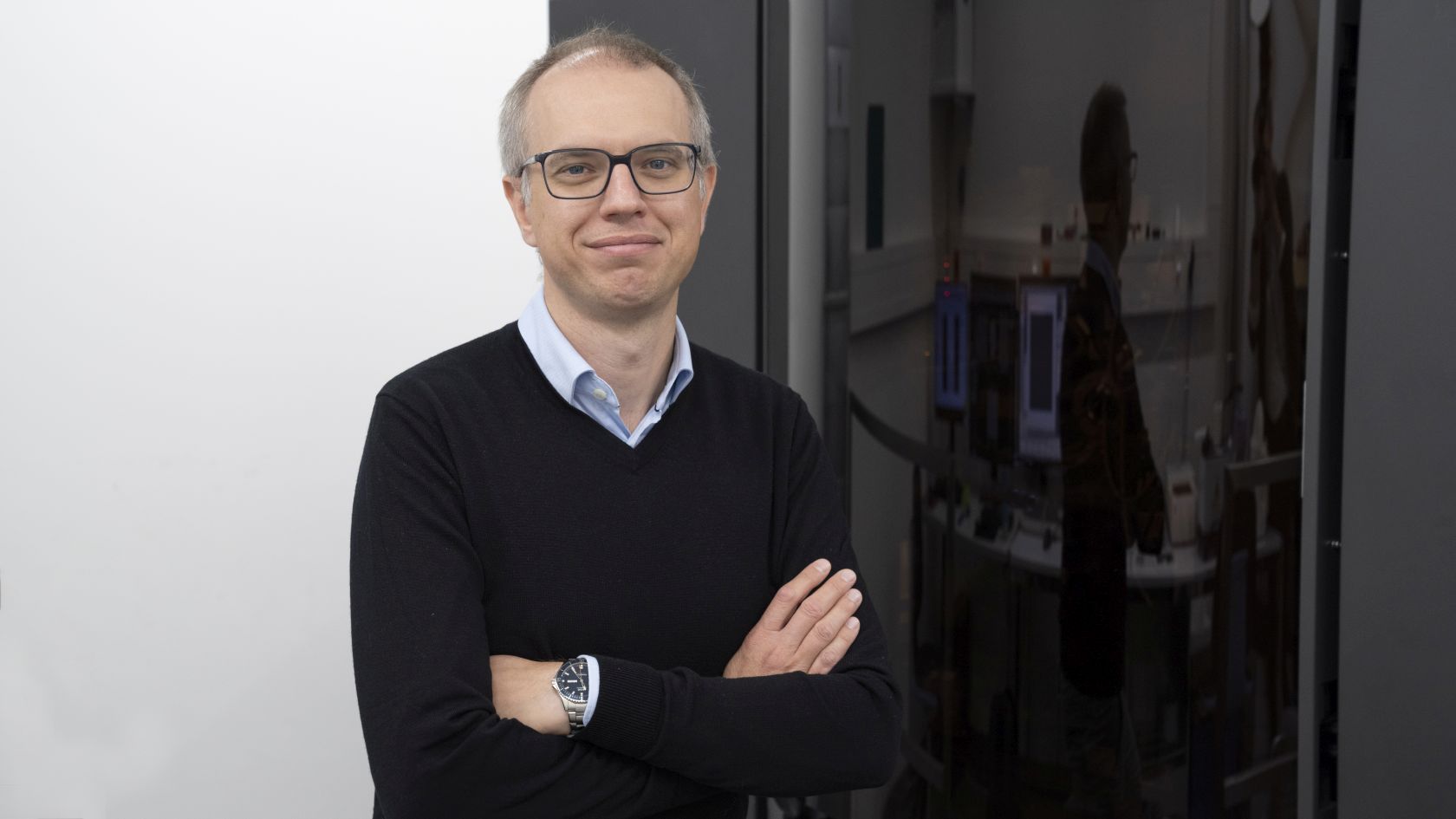
Martin Jinek, portrait linked from his University of Zurich research-group page
. [ref]Martin Jinek research profile at Zurich. Named profile and linked portrait
Scott M. Coyle coauthored a 2011 biochemical and structural investigation of Xrn1 with Martin Jinek and Jennifer A. Doudna. It linked Xrn1 5′-phosphate recognition with processivity, the persistence of successive cleavage events during an enzyme–substrate encounter.[ref]
The experimental evidence included degradation of labeled RNA assessed by polyacrylamide gel electrophoresis. Comparing intact substrate with shorter products helped distinguish efficient complete processing from the accumulation of intermediates.[ref]
Coupled 5′ nucleotide recognition and processivity in Xrn1-mediated mRNA decay by Martin Jinek and others. Results and Figure 3: degradation assays and intermediate products
An original bookkeeping example separates molecule disappearance from the number of cleaved bonds. Suppose a sample begins with identical chains, each nucleotides long. If every chain loses just one terminal nucleotide, none of the original full-length molecules remains, but nucleotides are still present in the shortened chains. Their loss from the full-length band does not imply complete conversion into individual nucleotides.
Conversely, a large amount of short product at one sampling time does not alone measure the reaction rate or prove that each chain stayed bound throughout processing. A time series and appropriate controls add information that a single end-point gel electrophoresis image cannot supply. These are interpretive examples, without an inferred assignment of individual experiments from Coyle's author position.
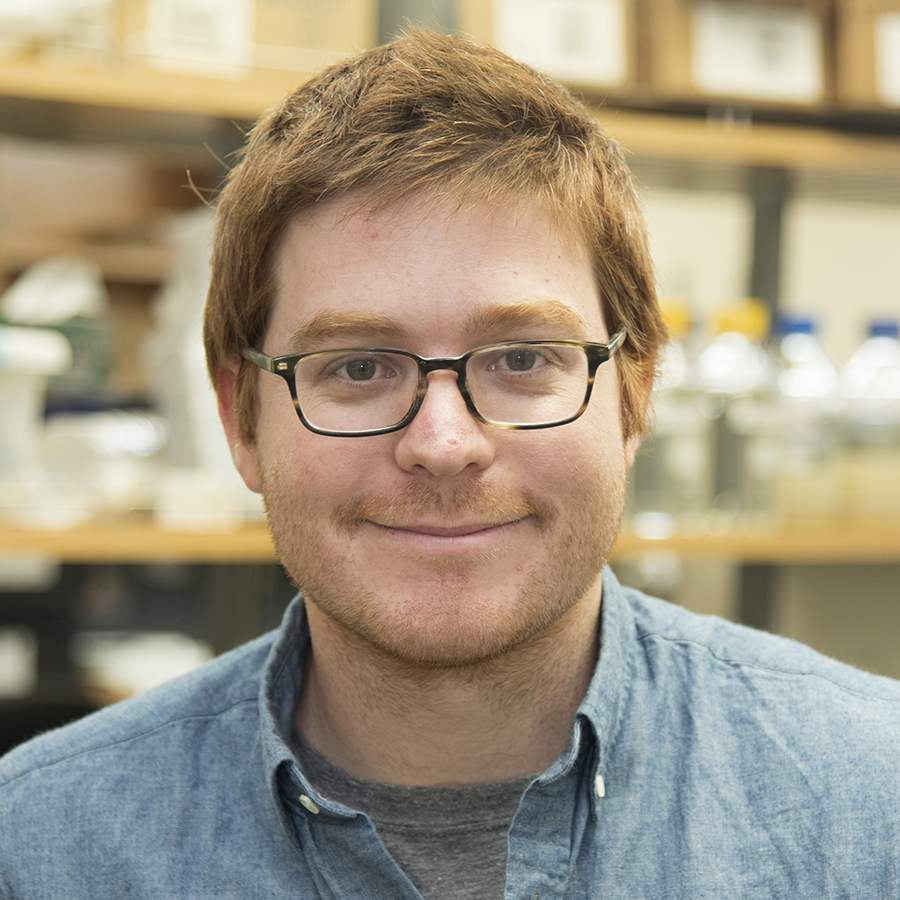
Scott M. Coyle, portrait linked from the University of Wisconsin–Madison Biotechnology Training Program
. [ref]Scott M. Coyle institutional portrait and author identity. Named Scott Coyle portrait; full-name correspondence confirmed by his own publication
Jennifer A. Doudna studies RNA–protein systems and their roles in gene expression. She coauthored the 2011 Xrn1 study with Martin Jinek and Scott M. Coyle, connecting recognition of an RNA's end with its processive degradation.[ref]
Doudna also coauthored the 2012 biochemical demonstration that Cas9 uses RNA guides for sequence-directed DNA cleavage. The study showed that a single engineered RNA could combine the guiding functions of the natural two-RNA system, establishing a basis for programmable CRISPR genome editing.[ref]
The distinction between cutting a molecule and editing a genome is essential. Cleavage is an experimentally observed chemical event; the final inherited sequence additionally depends on DNA repair and cellular context. A nuclease result alone does not specify a repaired allele.
For an original geometric example, one complete double-strand cut in a circular DNA molecule opens it into one linear molecule. One internal double-strand cut in an already linear molecule instead gives two fragments. The same number of cuts can therefore yield different product counts depending on the starting topology. This elementary accounting illustrates why a gel electrophoresis result must be interpreted with a known starting substrate; it is not a numerical result from either paper.
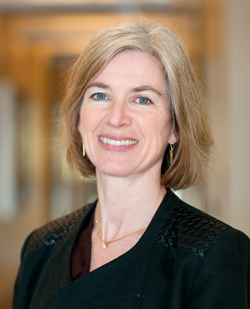
Jennifer A. Doudna, portrait by Keegan Houser linked from her Berkeley faculty profile
. [ref]Jennifer A. Doudna faculty profile at Berkeley. Named portrait and photo credit
Timothy S. Gardner is the named first author of the 2000 paper Construction of a genetic toggle switch in Escherichia coli, coauthored with Charles R. Cantor and James J. Collins. The study reports a synthetic bistable gene regulatory network switched by transient chemical or thermal induction.[ref]
A central design question is whether mutually inhibitory components necessarily produce a memory. An original counterexample uses positive concentrations and the symmetric modelAt equilibrium, and , so . The only positive equilibrium is . This model has two inhibitory branches but no pair of asymmetric equilibria.
A model with steeper inhibition, such as squared concentrations in the denominators, can instead have two stable asymmetric states for suitable parameters. This contrast explains why network wiring and quantitative response functions must be assessed together. It is an original illustrative calculation, not a fitted reconstruction of the paper or an attribution of a particular derivation to Gardner alone.
The reported toggle established an experimentally constructed example of bistability in a designed biological network. Mutual transcriptional repression is its architectural idea, while measurements of switching and persistence test whether the architecture realizes the intended behaviour.
Charles R. Cantor coauthored the 2000 paper constructing a genetic toggle switch with Timothy S. Gardner and James J. Collins. The reported system coupled genetic regulation to a bistable memory-like response in Escherichia coli.[ref]

A Boston University research account published in 2003 identifies Cantor with the Center for Advanced Biotechnology and describes work on DNA analysis and haplotypes.[ref]
Dynamic solutions to physiological problems by David J. Craig. Genes in context and named portrait caption
A simple genetics example makes the measurement problem tangible. The two arrangements
AB/ab and Ab/aB both produce an individual with genotype A/a at one site and B/b at another. They nevertheless place the variants on different chromosome copies. Measuring the unphased genotype at each site therefore does not by itself recover the haplotypes.The example illustrates a reusable distinction between identifying individual sequence variants and determining their joint arrangement. The institutional account concerns methods intended to obtain that longer-range genetic information. Together with the coauthored switch study, it shows two different quantitative questions in biotechnology: reconstructing the organization of genetic material and constructing a network with a chosen dynamical response.
James J. Collins works on synthetic biology and engineering biological systems. MIT Biological Engineering's official profile describes modeling, designing and building synthetic gene circuits and programmable cells.[ref]

Portrait of James J. Collins from MIT Biological Engineering
. Source. With Timothy S. Gardner and Charles R. Cantor, Collins coauthored the 2000 construction of a genetic toggle switch in Escherichia coli. The paper reports two stable states switched by transient chemical or thermal induction and presents a theory of conditions for bistability.[ref]
Construction of a genetic toggle switch in Escherichia coli by Timothy S. Gardner and others. Nature 403, 339–342, Abstract and verified byline
The scientific question is whether feedback can preserve a state after a temporary input disappears. An original contrast is a one-variable relaxation model , with . Differences between initial states decay as , so a long transient does not by itself establish two stable memories. A bistable network instead permits different long-term states under the same final external conditions.
An informative experiment therefore compares trajectories from different initial states after removing the switching input, rather than relying only on an endpoint observed while an inducer remains present. The distinction connects the reported toggle to measurable dynamical behaviour. It also illustrates why an engineering design and its biological realization need an explicit model, controls and observed persistence.
Pinned article: Introduction to the OurBigBook Project
Welcome to the OurBigBook Project! Our goal is to create the perfect publishing platform for STEM subjects, and get university-level students to write the best free STEM tutorials ever.
Everyone is welcome to create an account and play with the site: ourbigbook.com/go/register. We belive that students themselves can write amazing tutorials, but teachers are welcome too. You can write about anything you want, it doesn't have to be STEM or even educational. Silly test content is very welcome and you won't be penalized in any way. Just keep it legal!
Intro to OurBigBook
. Source. We have two killer features:
- topics: topics group articles by different users with the same title, e.g. here is the topic for the "Fundamental Theorem of Calculus" ourbigbook.com/go/topic/fundamental-theorem-of-calculusArticles of different users are sorted by upvote within each article page. This feature is a bit like:
- a Wikipedia where each user can have their own version of each article
- a Q&A website like Stack Overflow, where multiple people can give their views on a given topic, and the best ones are sorted by upvote. Except you don't need to wait for someone to ask first, and any topic goes, no matter how narrow or broad
This feature makes it possible for readers to find better explanations of any topic created by other writers. And it allows writers to create an explanation in a place that readers might actually find it.
Figure 1. Screenshot of the "Derivative" topic page. View it live at: ourbigbook.com/go/topic/derivativeVideo 2. OurBigBook Web topics demo. Source. - local editing: you can store all your personal knowledge base content locally in a plaintext markup format that can be edited locally and published either:This way you can be sure that even if OurBigBook.com were to go down one day (which we have no plans to do as it is quite cheap to host!), your content will still be perfectly readable as a static site.
- to OurBigBook.com to get awesome multi-user features like topics and likes
- as HTML files to a static website, which you can host yourself for free on many external providers like GitHub Pages, and remain in full control

Figure 2. You can publish local OurBigBook lightweight markup files to either OurBigBook.com or as a static website.
Figure 3. Visual Studio Code extension installation.
Figure 5. . You can also edit articles on the Web editor without installing anything locally. Video 3. Edit locally and publish demo. Source. This shows editing OurBigBook Markup and publishing it using the Visual Studio Code extension. 
- Infinitely deep tables of contents:


All our software is open source and hosted at: github.com/ourbigbook/ourbigbook
Further documentation can be found at: docs.ourbigbook.com
Feel free to reach our to us for any help or suggestions: docs.ourbigbook.com/#contact