A biologist who studies biological cells, including their organization, molecular machinery, division and interactions. Microscopy can reveal where a component is located, while a perturbation tests what that component contributes to cellular behavior.
Researcher in autophagy. With Miki Tsukada, Ohsumi isolated autophagy-defective yeast mutants, turning a cellular recycling process into a tractable problem in genetics.[ref]
Researcher in autophagy. With Yoshinori Ohsumi, Tsukada isolated and characterized autophagy-defective yeast mutants, helping identify genetic requirements for a cellular degradation pathway.[ref]
Researcher in cellular evolution. With David A. Baum, Baum proposed an inside-out account of the origin of the eukaryotic cell, using cell organization to formulate a testable evolutionary hypothesis.[ref]
An inside-out origin for the eukaryotic cell by David A. Baum and Buzz Baum. Title, author list and reported study
Researcher in cancer invasion. Cheung and collaborators investigated collective invasion in breast cancer, connecting a basal epithelial program with the coordinated movement of tumor cells.[ref]
Researcher in developmental cell migration. Carmona-Fontaine and collaborators studied contact inhibition of locomotion in neural crest migration, connecting cell collisions with directional tissue movement.[ref]
Cell biologist and coauthor of an undergraduate teaching study introducing mammalian cell culture and viability measurements. The work connected direct observation of cultured cells with quantitative interpretation of cellular survival.[ref]

Portrait of Verónica A. Segarra
. External portrait linked by the institutional profile.A cell biologist whose joint work with George E. Palade traced the intracellular transport of secretory proteins.[ref]
https://magazine.alumni.ubc.ca/2019/spring-2019/departments/in-memoriam/james-d-jamieson. Institutional obituary: James D. Jamieson, 1934-2018, cell-biology research
Cell biologist whose work with James D. Jamieson traced transport of secretory proteins through pancreatic cells. Following newly synthesized material connected distinct cellular compartments into a functional secretory pathway.[ref]
A cell biologist.[ref]
https://www.nobelprize.org/nomination/archive/show.php?id=12566. Nomination Archive: Camillo Golgi, 1843-1926, general pathology and histology; microscopic nervous-system research

Portrait of Camillo Golgi
. Portrait identified in the Wikimedia Commons file record. Source.Researcher in membrane biology. With Michael Edidin, Frye followed intermixing of mouse and human surface antigens after cell fusion, providing experimental evidence that membrane components can move laterally.[ref]
Researcher in membrane biology. With Larry Frye, Edidin studied rapid intermixing of surface antigens in fused cells, connecting the redistribution of labeled components with lateral mobility in the cell membrane.[ref]
Researcher in cytokinesis. Rappaport manipulated sand-dollar eggs to investigate the cleavage stimulus, using altered cellular geometry to test how division machinery determines the position of a furrow.[ref]
Experiments concerning the cleavage stimulus in sand dollar eggs by Raymond Rappaport. Title, author list and reported study
Researcher in intracellular protein targeting. Laskey coauthored experiments identifying a nucleoplasmin region that directs nuclear import, connecting a part of a protein with transport through the nuclear pore complex.[ref]
Cell biologist studying protein targeting across membranes. With Bernhard Dobberstein, Blobel reconstructed aspects of cotranslational protein translocation, connecting information in a growing polypeptide with delivery to the secretory pathway.[ref]
Transfer of Proteins across Membranes I by Günter Blobel and Bernhard Dobberstein. Title, author list and reported study
- Controlled Proteolysis of Nascent Polypeptides in Rat Liver Cell Fractions II by David D. Sabatini and Günter Blobel
- Intracellular protein topogenesis by Günter Blobel
- Transfer of Proteins across Membranes I by Günter Blobel and Bernhard Dobberstein
- Transfer of Proteins across Membranes II by Günter Blobel and Bernhard Dobberstein
Cell biologist who, with Günter Blobel, used controlled digestion of nascent polypeptides to investigate their location in cellular fractions. Protection from digestion connected membrane enclosure with the path of protein synthesis.[ref]
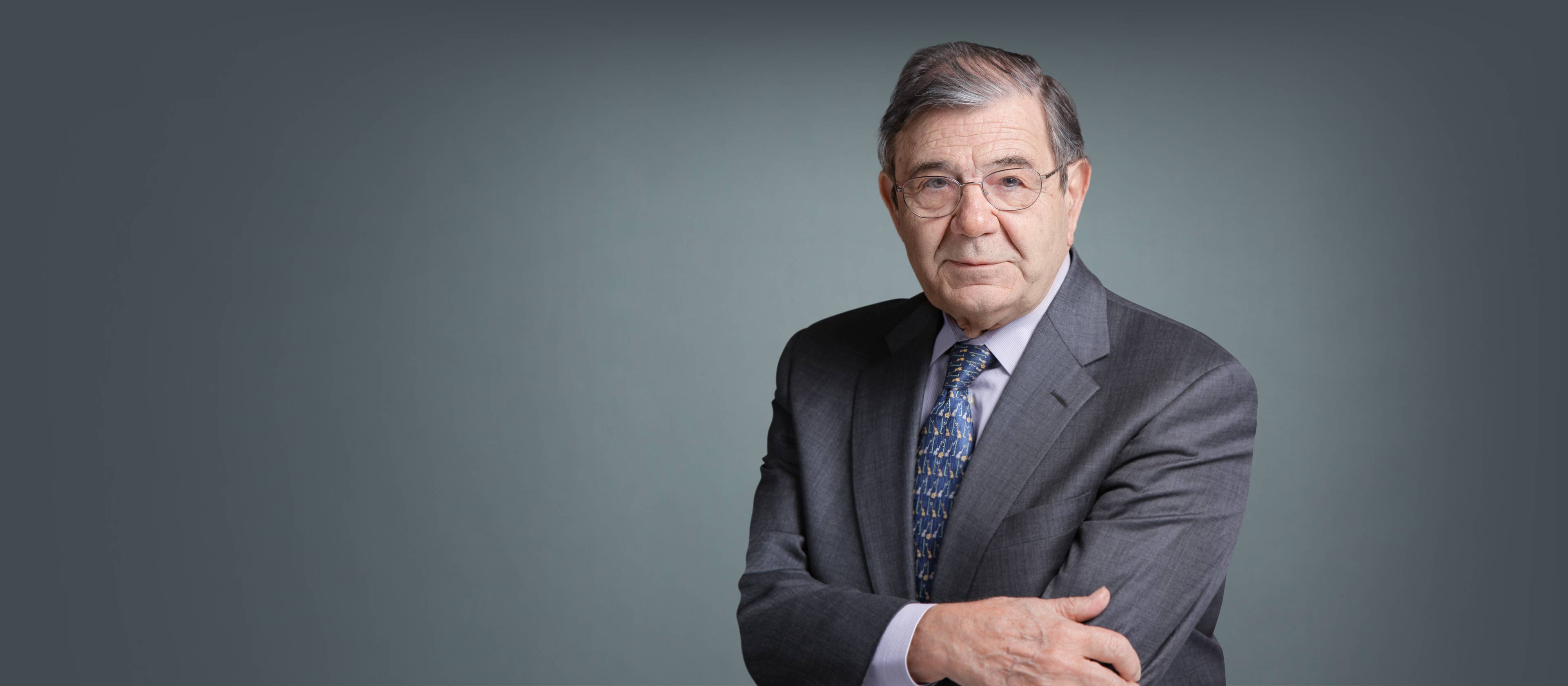
Cell biologist studying insertion of membrane proteins at the endoplasmic reticulum. Shao and Ramanujan S. Hegde analyzed how cellular machinery delivers and inserts hydrophobic proteins into a membrane.[ref]
Membrane Protein Insertion at the Endoplasmic Reticulum by Sichen Shao and Ramanujan S. Hegde. Title, author list and reported study

Researcher in protein targeting and membrane biogenesis. With Sichen Shao, Hegde analyzed insertion of membrane proteins at the endoplasmic reticulum, connecting protein properties with the machinery that handles them.[ref]
Membrane Protein Insertion at the Endoplasmic Reticulum by Sichen Shao and Ramanujan S. Hegde. Title, author list and reported study


Hitoshi Nakatogawa is a researcher in molecular biology and biochemistry. His work includes ribosome stalling and the membrane changes involved in autophagy. A named institutional laboratory profile identifies both his autophagy research and his earlier joint SecM papers with Koreaki Ito.[ref]
Hitoshi Nakatogawa laboratory spotlight at Tokyo Institute of Technology. Research interest and Selected publications, especially the 2001 and 2002 SecM papers
Nakatogawa and Koreaki Ito investigated how the sequence of an emerging nascent chain affects translation. Their 2002 paper identified an arrest sequence in SecM and suppressor mutations at the constriction of the ribosomal exit tunnel. The finding helped establish that a growing protein can influence the machinery synthesizing it.[ref]
The ribosomal exit tunnel functions as a discriminating gate by Hitoshi Nakatogawa and Koreaki Ito. Abstract: arrest motif, 23S-rRNA and L22 suppressors
To see a quantitative consequence of pausing, consider an invented steady-input example. If ribosomes per second enter a segment and each normally spends seconds there, its mean occupancy is ribosome. A pause increasing the mean residence time to seconds would predict an occupancy of , provided that the arrival rate remains unchanged and crowding can be neglected. A strong local accumulation can therefore reflect longer residence time, rather than faster production of completed proteins. At high occupancy, queues and collisions invalidate the independent-flow approximation; that failure is itself experimentally meaningful.
The connection with autophagy is methodological rather than a claim that these are one pathway: both questions ask how local molecular interactions produce a larger cellular behavior. His laboratory's stated autophagy questions concern where the membranes forming an autophagosome originate and how their assembly proceeds.[ref]
Hitoshi Nakatogawa laboratory spotlight at Tokyo Institute of Technology. Research interest: membrane sources, autophagosome formation and experimental approaches
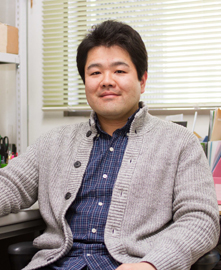
Hitoshi Nakatogawa
. Named portrait in the institutional Nakatogawa Laboratory spotlight.S. C. Silverstein studied the experimental cell biology of phagocytosis. Joint work with S. D. Wright showed that complement system receptor-mediated uptake and release of hydrogen peroxide could be separated by comparing ligand-coated culture surfaces.[ref]
A 1984 study asked a further physical question: how accessible is the interface between a macrophage and its target? The authors compared access of soluble proteins beneath macrophages spread on glass with access beneath macrophages on surfaces coated with ligands promoting phagocytosis. The first interface admitted proteins with molecular mass as large as , whereas the ligand-coated interface excluded even tested proteins of molecular mass .[ref]
This supported formation of a seal around the contact region, helping explain why an external scavenging enzyme might fail to reach locally released material. It is a compartment-access experiment: exclusion of the tested proteins does not establish impermeability to every small molecule. The example connects a cellular process with a measurable physical boundary.
S. D. Wright investigated how receptors of phagocytes connect recognition of coated targets with distinct cellular responses. With S. C. Silverstein, Wright compared hydrogen peroxide release from granulocytes, monocytes and macrophages spreading on surfaces coated with different ligands. The 1983 study found strong release on IgG-coated surfaces but little on surfaces carrying C3b or iC3b, historically written C3bi.[ref]
The useful mechanistic distinction was between engulfment and an oxidative response. Under conditions combining fibronectin with complement ligands, the cultured monocytes showed a strong phagocytosis response without measurable hydrogen peroxide release.[ref]
Receptors for C3b and C3bi promote phagocytosis but not the release of toxic oxygen from human phagocytes by S. D. Wright and S. C. Silverstein. Abstract; fibronectin/C3-coated surfaces and dissociation of the two outcomes
Thus receptor engagement does not specify one indivisible activation state. Measuring only uptake would miss a difference revealed by measuring a second output.- CD14, a receptor for complexes of lipopolysaccharide (LPS) and LPS binding protein by S. D. Wright and others
- Phagocytosing macrophages exclude proteins from the zones of contact with opsonized targets by S. D. Wright and S. C. Silverstein
- Receptors for C3b and C3bi promote phagocytosis but not the release of toxic oxygen from human phagocytes by S. D. Wright and S. C. Silverstein
S. Nielsen is the first author of a 1995 study connecting vasopressin-regulated water permeability to the movement of water-channel proteins. The investigators perfused isolated rat collecting ducts, measured their permeability to water, and used labeled electron microscopy to locate the channels in the same tubules. During vasopressin exposure, permeability and channel labeling at the exposed cell membrane increased; removing vasopressin reversed both changes.[ref]
The study supported redistribution of channels from internal vesicles to the cell membrane, rather than treating a physiological response as evidence of new protein synthesis. The channel is known as aquaporin-2. For a conceptual example, a fixed pool of 100 channels can change from 20 at the surface to 40 at the surface by moving channels from internal stores. The total is unchanged even though the surface pool doubles. This distinction between total abundance, subcellular location and measured function makes trafficking a testable explanation for a rapid hormonal response.
Salah Amasheh studies the selective barrier formed by epithelium. A 2002 study led by Amasheh tested whether claudin-2, a tight junction protein, could change the passage of ions between neighboring biological cells. The investigators introduced Complementary DNA encoding claudin-2 into a normally resistant cultured kidney epithelium, checked where the protein appeared, and compared electrical measurements with control cultures.[ref]
Claudin-2 expression increased conductivity through the spaces between biological cells by a factor of 5.6 and favored cations over anions. Transport of several larger test substances did not increase. The result illustrates a selective channel rather than an indiscriminate hole: greater passage of one class of ions need not mean greater passage of every dissolved substance. Combining localization, controls and measurements of different solutes made the interpretation stronger than an electrical measurement alone.[ref]
Claudin-2 expression induces cation-selective channels in tight junctions of epithelial cells by Salah Amasheh and others. abstract, conductivity, ion selectivity and unchanged marker fluxes

Salah Amasheh
. Portrait identified on his institutional profile; image credited there as private.Thomas Wollert investigates how proteins reshape cell membranes. In a 2009 study, Wollert and colleagues reconstructed membrane cutting using purified ESCRT-III components and large artificial vesicles. Fluorescence microscopy revealed the formation and detachment of smaller vesicles into their interiors. This reduced a process normally embedded in a complex biological cell to components that could be added and omitted separately.[ref]
Three ESCRT-III components sufficed for detachment in this system. Additional machinery, including an ATPase, was needed to recycle the protein assembly and sustain further rounds. The distinction is illuminating: the minimum machinery for one cutting event need not be the minimum machinery for repeated operation. The purified system established sufficiency under its experimental conditions, without showing that all processes in living biological cells use exactly that minimal sequence. The paper credits Wollert with preparing artificial vesicles, purifying and labeling proteins, and performing microscopy.[ref]

Thomas Wollert
. Portrait used by the Max Planck Institute of Biochemistry for its 2015 award announcement.M. Sym led a study identifying Zip1 as a component required for the synaptonemal complex in budding yeast. In the reported mutants, homologous chromosomes could become associated, but normal assembly of the connecting synaptonemal structure failed.[ref]
ZIP1 is a synaptonemal complex protein required for meiotic chromosome synapsis by M. Sym and others. 1993, abstract: paired homologues and defective synaptonemal-complex assembly
The experiment distinguished initial chromosome association from completion of chromosome synapsis. Those steps need not fail together. Combining a defined mutation with observations of chromosome structure made it possible to assign a role to a particular protein within a larger process of meiosis. The indexed byline is retained without guessing a full name.
Richard Rodewald investigated selective transport of maternal antibodies across the newborn rat intestine. His 1973 study followed ferritin-linked immunoglobulins and antiperoxidase antibodies through intestinal epithelial cells, using tracer localization to distinguish selective uptake from nonspecific entry.[ref]
Intestinal transport of antibodies in the newborn rat by Richard Rodewald. Abstract and Discussion, pp. 202–205: immunoglobulin tracers and transport controls
In proximal intestinal cells, suitable antibodies bound at the apical surface and entered transport vesicles. Contrasting tracers and intestinal regions helped show that a molecule entering a cell is not necessarily carried into the circulation. The experiment made the route and selectivity of transcytosis visible, rather than relying only on a final blood concentration.
P. A. Janmey investigated how networks of cytoskeletal proteins bear mechanical loads. A 1991 study compared purified actin, tubulin and vimentin assemblies under deformation. The networks differed in stiffness and resistance to disruption, with vimentin networks especially able to withstand large deformations.[ref]
Viscoelastic properties of vimentin compared with other filamentous biopolymer networks by P. A. Janmey and others. Abstract and pp. 155–160: parallel viscoelastic measurements
The comparison separated the mechanical properties of a filament network from the complexity of an intact cell. A material's response to a small deformation does not completely predict whether it survives a large one. This connects cytoskeleton composition to the distinct questions of stiffness, viscoelasticity and mechanical resilience.

Portrait of P. A. Janmey
. Identified University of Pennsylvania physiology portrait; institutional profile describes cytoskeletal rheology research. Source.X. Liu (apoptosis researcher) is the first author of the 1996 paper reconstructing aspects of apoptosis in cell-free extracts. Fractionation identified a requirement for cytochrome c together with deoxyadenosine triphosphate; removal of cytochrome c diminished the apoptotic response, and adding it back restored activity.[ref]
Induction of apoptotic program in cell-free extracts: requirement for dATP and cytochrome c by X. Liu and others. Abstract: extract fractionation, immunodepletion and add-back
This experiment connected a protein associated with mitochondria to activation of a cellular death program. Removing and restoring one component is especially informative because it tests a biochemical requirement within the extract. The paper's indexed byline is X. Liu; this entry does not infer a full identity from those initials.
Daiju Kitagawa led work explaining the ninefold organization of centrioles through interactions between SAS-6 molecules. The 2011 study combined structural analysis, biochemical assembly and cellular experiments: rod-shaped dimers associated through their ends, and disrupting the relevant association impaired centriole formation.[ref]
Structural basis of the 9-fold symmetry of centrioles by Daiju Kitagawa and others. Summary: SAS-6 oligomerization and centriole formation
A model built from the related Chlamydomonas reinhardtii protein placed nine dimers in a ring with spokes extending outward. Recombinant protein also formed cartwheel-like assemblies. The work connects a repeated protein structure to the larger geometry of an organelle, rather than treating its symmetry as an unexplained cellular pattern.[ref]
Structural basis of the 9-fold symmetry of centrioles by Daiju Kitagawa and others. Summary and structural model of Bld12p
Joanne F. Berson led a 2001 study of how Pmel17 helps form premelanosomes, the developing compartments in which melanin is deposited. The researchers followed processing and localization of the protein, then expressed it in nonpigmented cells. Expression alone initiated characteristic internal striations within multivesicular bodies.[ref]
Pmel17 initiates premelanosome morphogenesis within multivesicular bodies by Joanne F. Berson and others. Abstract: post-Golgi processing and striation formation
That reconstruction addressed causation more directly than finding Pmel17 beside existing pigment: a normally nonpigmented cell acquired part of the specialized internal architecture after the protein was introduced. It established a role in compartment construction without implying that one protein recreates every step of pigment production.
Mikio Furuse investigated the molecular construction of tight junctions. In a 1998 study, introducing claudin-1 or claudin-2 into fibroblasts that normally lack tight junctions produced networks of junction-like strands at contacts between cells. Immunofluorescence located the introduced proteins, while freeze-fracture imaging revealed the strand architecture.[ref]
The experiment demonstrated that either claudin could build a key structural feature in a simplified cellular setting. Recruitment of occludin further distinguished a strand-forming component from another associated junctional protein.
- A single gene product, claudin-1 or -2, reconstitutes tight junction strands and recruits occludin in fibroblasts by Mikio Furuse and others
- Claudin-based tight junctions are crucial for the mammalian epidermal barrier: a lesson from claudin-1-deficient mice by Mikio Furuse and others
- Occludin: a novel integral membrane protein localizing at tight junctions by Mikio Furuse and others
Stuart A. Aaronson studies the connection between growth factors, their receptors and cancer. His coauthored account of growth-factor families distinguishes extracellular signal molecules from the receptors that recognize them and transmit signals into a cell. The distinction explains how an alteration of a receptor can change proliferation even without an increase in its ligand.[ref]
Classification of Growth Factors and Their Receptors by Anna Bafico and Stuart A. Aaronson. 2003, growth-factor families and growth-factor receptor classes
The scientific connection is between normal growth regulation and oncogene action: a signaling pathway that normally responds to tissue needs can contribute to inappropriate cell growth when its control is disrupted.

Portrait of Stuart A. Aaronson
. Identified National Cancer Institute portrait, image 8199, hosted by Wikimedia Commons. Source.
Anna Bafico coauthored a mechanistic classification of growth factors and their receptors. The account treats a growth-factor family as a collection of related signal molecules with distinguishable receptor interactions, rather than as a single interchangeable stimulus.[ref]
Classification of Growth Factors and Their Receptors by Anna Bafico and Stuart A. Aaronson. 2003, Platelet-Derived Growth Factor Family and Fibroblast Growth Factor Family
For example, related growth-factor chains can assemble into different dimers. Their receptor recognition and target-cell context help determine the biological response. This provides a useful bridge between protein structure, signal transduction and the regulation of cell proliferation.
A. Armulik investigated how pericytes regulate the blood-brain barrier. In the 2010 mouse study, pericyte-deficient mutants showed increased passage of tracers across brain vessels. The increased permeability involved endothelial transcytosis; the study also linked pericytes to endothelial gene-expression patterns and polarization of astrocyte end-feet.[ref]
Pericytes regulate the blood–brain barrier by A. Armulik and others. Abstract: pericyte-deficient mice, tracer permeability, transcytosis and astrocyte polarization
This makes an important mechanistic distinction: a barrier depends on regulated transport through cells as well as seals between cells. Measuring tracer escape and identifying the route of escape answer different experimental questions. The primary paper identifies the author as Annika Armulik.
C. Lemmers led a study of the polarity-associated scaffold hINADl/PATJ in human epithelial cells. The work identified interaction with Crumbs and localization near tight junctions, connecting a molecular interaction to a defined cellular boundary.[ref]
hINADl-PATJ, a homolog of discs lost, interacts with crumbs and localizes to tight junctions in human epithelial cells by C. Lemmers and others. 2002, abstract and title: interaction and epithelial localization
The scientific question was how an epithelium maintains different apical and basolateral domains. A scaffold can organize several interacting components at one location, so its role is not exhausted by its abundance. Interaction evidence and localization evidence together constrain a cell polarity mechanism, although neither alone proves every step of assembly. The primary byline identifies the author as Céline Lemmers.
Researcher in cancer genomics whose experiments connected damage in micronuclei with chromothripsis. This links an abnormal cellular compartment with the concentrated rearrangement of a chromosome, helping explain how many genome changes can arise together.[ref]
Researcher whose work investigated centromere formation and chromosome identity. Shang and collaborators studied how a functional centromere can be specified through cellular and chromatin context rather than inferred solely from a familiar repeated DNA sequence.[ref]
Researcher in centromere biology. Nergadze and collaborators studied the origin, inheritance and evolution of mammalian centromeres lacking the satellite repeats often associated with these chromosome regions.[ref]
Researcher studying asymmetric cell division. Inaba and collaborators investigated how the polarity protein Baz positions the centrosome in the male Drosophila germline, connecting intracellular organization with the orientation of a stem-cell division.[ref]
Researcher in chromosome segregation and chromatin organization. Nasmyth’s laboratory investigated how cohesin holds sister DNA molecules together and how related molecular complexes organize loops, connecting molecular topology with accurate cell division.[ref]
https://www.bioch.ox.ac.uk/research/nasmyth. Research description, cohesin-mediated entrapment and loop extrusion

Portrait of Kim Nasmyth
. Jimcricket90. CC BY-SA 4.0, via Wikimedia Commons. Source.
Researcher in cell cycle control. D’Aquino and collaborators studied how Kin4 inhibits exit from mitosis when the spindle apparatus is incorrectly positioned, connecting spatial organization with checkpoint control.[ref]
Researcher studying stem cells and aging. Cheng and collaborators linked centrosome misorientation with reduced stem-cell division, providing a cellular mechanism through which tissue maintenance can change with age.[ref]
Centrosome misorientation reduces stem cell division during aging by Jun Cheng and others. Title, author list and reported study
Researcher in asymmetric cell division. Yuan and collaborators studied the dependence of the centrosome orientation checkpoint on cyclin A localization downstream of Par-1, linking cell polarity with the timing of division.[ref]
Researcher in live-cell chromatin imaging. Robinett and collaborators used recognition between the lac operator and repressor to mark DNA regions in living cells, making chromosome organization observable through a genetically specified tag.[ref]
Researcher in live-cell genome imaging. Chen and collaborators adapted CRISPR-Cas9 targeting to visualize particular DNA loci in living human cells, connecting sequence recognition with observations of chromosome dynamics.[ref]
Researcher in cell cycle control. Caydasi and collaborators studied activation of Kin4 by Elm1, helping explain the signaling mechanism of the spindle position checkpoint.[ref]
Elm1 kinase activates the spindle position checkpoint kinase Kin4 by Ayse Koca Caydasi and others. Title, author list and reported study
Researcher studying insulin and glucose transport. Cushman and collaborators investigated the movement of intracellular transport systems to the cell membrane in adipose cells, helping distinguish transporter redistribution from production of additional transporter molecules.[ref]
Researcher in developmental cytology. Masui and collaborators studied cytoplasmic control of nuclear behavior during frog-oocyte maturation, helping establish that transferable cellular factors can control meiotic progression.[ref]
Researcher in chromosome evolution. Gornik and collaborators investigated the loss of ordinary nucleosomal DNA chromosome condensation in dinoflagellates and the appearance of a novel nuclear protein, comparing alternative forms of genome packaging.[ref]
Researcher in cell cycle control. Lohka and collaborators purified maturation-promoting factor, connecting a transferable activity that triggers early mitotic events with a biochemically isolatable cellular regulator.[ref]
Researcher in cell cycle control. Murray and collaborators investigated how cyclin synthesis and destruction regulate maturation-promoting factor, connecting periodic protein turnover with progression through division.[ref]
Researcher in cancer biology. Fischer and collaborators investigated the contribution of epithelial-to-mesenchymal transition to lung metastasis and drug resistance, separating processes that can occur together but have different functional requirements.[ref]
Researcher in cancer cell-state transitions. Pastushenko and collaborators identified intermediate states during epithelial-to-mesenchymal transition, showing why a simple two-state description can miss biologically distinct populations.[ref]
Articles were limited to the first 100 out of 132 total.
Articles by others on the same topic
There are currently no matching articles.