Brian D. Corbin is the first-named author of a 2008 study of calprotectin and nutritional immunity. The work examined how a host protein's chelation of nutrient metals contributes to defense in infected tissue.[ref]
The study connected the location of calprotectin in tissue with evidence for restriction of manganese and zinc. Institutional reporting describes mass spectrometry imaging as a way of locating proteins within the affected tissue. Spatial localization and chemical binding address different parts of the biological explanation.[ref]
Metal chelation and inhibition of bacterial growth in tissue abscesses by Brian D. Corbin and others. Abstract: tissue localization and metal chelation
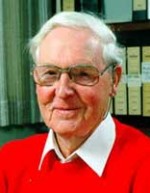
[ref]Brian D. Corbin portrait and 2008 research context at Vanderbilt. Institutional research account, imaging method and named photograph
An original spatial-averaging example shows why location matters. Suppose two equally sized regions have metal concentrations of and arbitrary units. Their average is . A different sample with concentrations and has the same average but a completely different local distribution. A bulk measurement of cannot distinguish these cases.
Furthermore, a total metal measurement does not determine how much is chemically accessible to a biological cell. Binding to a protein, spatial distribution and local concentration are separate properties. This is a measurement interpretation, not a culture protocol, a therapeutic dose or a numerical result from Corbin's study. The byline establishes joint scientific credit without assigning every technique to the first author.

Brian D. Corbin portrait and 2008 research context at Vanderbilt. Caption explicitly identifies postdoctoral fellow Brian Corbin and credits Neil Brake
Eric P. Skaar is a researcher in microbiology and immunology. His laboratory's stated research interests include metal ion trafficking and nutritional immunity, in which a host restricts access to nutrients. The named institutional profile identifies the researcher without requiring expansion of the middle initial.[ref]
Eric P. Skaar research profile and laboratory statement at Vanderbilt. Named person page; laboratory research statement on metal metabolism and nutritional immunity
Skaar also coauthored a 2020 study in microbial ecology examining how community context changes the interpretation of a metabolic advantage. The byline establishes joint scientific credit, without specifying that any one author personally performed every experiment.[ref]
Clostridioides difficile proline fermentation in response to commensal clostridia by Christopher A. Lopez and others. Published byline and Abstract: contextual interpretation of microbial competition
An original accounting model illustrates why nutrient quantity and nutrient accessibility are different questions. Let a measured total amount of a metal bewhere denotes a free pool and a bound pool. Two hypothetical samples can both have arbitrary units while one has and the other . The total agrees, yet the free fraction changes from to . These are abstract amounts, not experimental conditions or measurements from Skaar's work.
The example does not identify the free pool with every biologically accessible form: accessibility depends on chemical speciation and the interacting biological system. It instead shows a limitation of a bulk measurement. A change in the distribution among chemical forms can matter even when the measured total remains unchanged.
This distinction connects an ecological question with a chemical one. To understand an interaction involving a nutrient, one must define what was measured, which forms were distinguished and what biological comparison supports the interpretation. Skaar's stated research focus makes that connection explicit: the presence of a metal in a sample is not, by itself, a full description of its role at a host–microbe interface.

Eric P. Skaar
. Portrait provided by the named Vanderbilt University Medical Center Skaar Lab profile.Kamila Nurmakova is a credited coauthor of a 2020 microbial ecology study investigating context-dependent metabolic competition. Its published affiliation identifies Berea College for this contribution; no later appointment or additional personal identity is inferred from that byline.[ref]
Clostridioides difficile proline fermentation in response to commensal clostridia by Christopher A. Lopez and others. Published full byline, author affiliations and Abstract
A general question raised by community comparisons is whether a difference between two biological categories changes when their surrounding context changes. This can be expressed as a statistical interaction, rather than assuming one category has a fixed advantage in every setting.
For an original numerical example, let an abstract quantitative phenotype have values and for categories A and B in context 1, but and in context 2. The A-minus-B differences are and . Their difference isThe category contrast therefore depends on context. These are chosen values, not measurements from the published study, and the calculation assigns no specific assay or experimental task to Nurmakova.
The comparison is only meaningful on a common measurement scale. Replacing one outcome by an unrelated signal in the second context would make the subtraction uninterpretable. Likewise, one observed difference does not establish an underlying interaction without considering sampling variation and independent replication. A confidence interval concerns uncertainty about an estimated contrast; the contrast itself specifies what biological difference is being estimated.
Nurmakova's documented scientific credit is participation in the joint research publication. The example develops the interpretive question behind context-dependent results while keeping that verified authorship separate from unreported individual roles. It also shows why describing a microbial community can be scientifically necessary: changing the context may change the comparison one is trying to explain.
Tess P. McNeely is a credited coauthor of a 2020 study of context-dependent microbial competition, with Belmont University listed in the publication's affiliations.[ref]
Clostridioides difficile proline fermentation in response to commensal clostridia by Christopher A. Lopez and others. Published full byline and author affiliations
Belmont's institutional repository also records a 2022 research abstract under Tess McNeely on microbial interactions, establishing an additional primary record of scientific authorship.[ref]Investigating Clostridioides difficile Genes Important during Zinc Limitation in the Presence of the Intestinal Microbiota by Tess McNeely and others. Belmont University Research Symposium record116, named byline and Spring2022 metadata
An important general issue in experimental microbiology is the distinction between biological replicates and technical replicates. Repeating a measurement of the same sample can reduce measurement noise without creating another independently sampled biological system. The following original model explains the distinction; it does not describe McNeely's personal experimental tasks or reproduce the study's dataset.
Suppose there are independent samples, each measured times. Let the between-sample variance be and independent measurement-error variance be . In a simple additive model, the variance of the overall mean isIncreasing reduces the second term, but not the first. With , , and negligible measurement noise, the standard error is . Treating all readings as independent biological observations would incorrectly suggest .
These invented values illustrate why a report should state what was independently repeated. A large number of machine readings is not a substitute for independent biological sampling, and uncertainty about a measured phenotype is not necessarily uncertainty from the instrument alone. This distinction helps readers assess experimental comparisons without attributing unreported methods or conclusions to a named coauthor.
Christopher A. Lopez is a microbiologist whose research includes bacterial responses to changing environments and interactions within microbial communities. His institutional seminar description identifies metabolism and genetics as complementary approaches to those questions.[ref]
Lopez was first and corresponding author of the 2020 study cited here, which investigated context-dependent metabolic competition in a microbial community.[ref]
Clostridioides difficile proline fermentation in response to commensal clostridia by Christopher A. Lopez and others. Published byline, corresponding-author information and Abstract
A useful mathematical distinction in such comparisons is relative performance versus absolute change. For an invented two-category observation, suppose counts change from to . The normalized ratio isYet A increased by a factor , while B decreased by a factor . Their relative change is . A fourfold competitive index therefore does not mean that the first category's absolute count increased fourfold. These invented counts illustrate a property of the ratio, not a biological result from the paper.
The denominator also matters when comparing experimental contexts. A change in relative performance can reflect a change in either component, and equal final proportions can occur at very different total abundances. A good interpretation states which ratio is reported and distinguishes a measurement of composition from a measurement of total population size.
This connects directly with the broader question of microbial ecology: an outcome measured in a community is not completely specified by describing one organism in isolation. Lopez's stated research interests make the surrounding environment part of the question. The arithmetic example explains one reason that community comparisons need carefully defined observables, without assigning a particular unreported measurement or personal experimental role to an author.
Abdoulaye Sy is a microbiologist credited with research on methylotrophy and plant-associated bacteria. In a 2005 study, Sy and collaborators investigated whether the ability to use methanol affected bacterial colonization of Medicago truncatula.[ref]
The bacterium was named using Methylobacterium in the original paper; LPSN now records the corresponding species as Methylorubrum extorquens. Retaining the publication's original title while distinguishing present nomenclature avoids making two names look like two different experimental organisms.[ref]
Methylorubrum extorquens in LPSN. Species record798433; Methylobacterium extorquens listed as a homotypic synonym
The motivating comparison separated successful colonization alone from performance in a mixed population. Bacterial variants defective in methylotrophy could colonize at a level comparable to the reference strain when assessed alone, yet were disadvantaged in competition. This supports a conditional advantage for that metabolic capability rather than the claim that methanol is the only available carbon source.[ref]
For an invented example, suppose two variants each reach recovered cells in separate observations, but in a mixture their proportions change from initially to afterward. A normalized competitive index for the first variant isEqual separate population sizes do not contradict that relative disadvantage: the competitive setting is a different experimental condition. Conversely, an index below one does not mean that no cells survived, and final proportions alone do not specify absolute population growth. These invented counts illustrate the comparison, not the published dataset.
The broader experimental lesson is to match the biological claim to the comparison performed. Being sufficient for colonization in one setting and being advantageous when competitors are present are different properties; an ecological result should retain that distinction.
J. W. Doran is a researcher credited with studies of soil microbial activity and bacterial indicators in environmental samples. A 1979 paper with D. M. Linn recorded the authors' USDA and University of Nebraska–Lincoln affiliation and investigated bacterial counts in rainfall runoff from pastureland.[ref]
Bacteriological Quality of Runoff Water from Pastureland by J. W. Doran and D. M. Linn. Original affiliation; Abstract, monitoring during 1976–1978
The study compared grazed and fenced, ungrazed areas, using several groups of bacteria as indicators. Its scientific question was how a land-use comparison appeared in measured water samples. A later 1984 study with Linn investigated how water-filled pore space related to carbon dioxide and nitrous oxide production in soils under different tillage conditions.[ref]
Bacteriological Quality of Runoff Water from Pastureland by J. W. Doran and D. M. Linn. Abstract, indicator groups and grazed/ungrazed comparison
[ref]An invented accounting example illustrates a distinction useful in environmental monitoring. If one water sample contains indicator units per millilitre and the total runoff is one litre, the estimated transported count is units. Another event at the same concentration but ten litres transports units. Equal concentration can accompany a tenfold difference in total transport. The calculation assumes each sample represents the corresponding water volume.
These contributions connect a biological observation to its physical context. A concentration, a total transported count and a soil gas-production rate answer different questions. Interpreting the measurements therefore requires their denominators, sampling conditions and comparison groups, rather than an isolated count alone.
D. M. Linn is the first author credited in the 1984 soil study with J. W. Doran that related water-filled pore space to microbial activity. The researchers examined carbon dioxide production, oxygen uptake and nitrous oxide production in samples from different tillage settings.[ref]
Effect of Water-Filled Pore Space on Carbon Dioxide and Nitrous Oxide Production in Tilled and Nontilled Soils by D. M. Linn and J. W. Doran. Original byline; Abstract, measured responses
The motivating idea was to relate activity to the fraction of pore volume occupied by water, rather than to water amount alone. This connects a biological rate to the soil's available pore space. The reported aerobic maximum near sixty percent water-filled pore space describes the study's conditions and should not be converted into a universal optimum for every soil or microbial process.[ref]
A constructed example illustrates rate normalization. Suppose a sample containing dry soil produces carbon dioxide in eight hours. Its average production rate per dry mass isA second sample producing from over the same interval has the same normalized rate. Twice as much collected gas does not establish twice the activity per unit mass.
Linn and Doran's contribution shows why both environmental state and measurement normalization matter. Water-filled pore space, dry soil mass and elapsed time are different parts of the experimental description; none can replace the others. Establishing which comparison is meaningful is part of explaining the biology, rather than merely formatting its numerical results.
H. S. Shin is the first credited author of a 1968 study separating biologically active fragments from complement C5 of the guinea pig. The research connected cleavage of a complement precursor with production of a smaller fraction having distinct biological effects.[ref]
Chemotactic and anaphylatoxic fragment cleaved from the fifth component of guinea pig complement by H. S. Shin and others. Science 162, 361–363, original byline and Abstract
Two readouts were informative. The smaller fraction attracted rabbit polymorphonuclear leukocytes and showed anaphylatoxic activity in a guinea pig ileum assay. The complement C5 source and the species used for each readout were therefore separate experimental choices.[ref]
The combination illustrates how a protein-cleavage experiment can join biochemical separation to function. Finding a fraction after cleavage establishes a material distinction; detecting chemotaxis asks whether it changes directed cellular movement. A tissue response supplies another endpoint. Agreement about which fraction carries the effects strengthens the connection between the separated material and the measured activities.
These readouts are not interchangeable measures of protein quantity, and they do not by themselves identify every step of a signaling pathway. The historical work supplies evidence about precursor processing and functional fragments, while modern questions about a particular receptor or human molecular form require corresponding evidence. The contribution is thus more specific than a general association between the complement system and inflammation.
U. R. Nilsson coauthored a 1965 study isolating beta1F-globulin from human blood serum and identifying it as the fifth component of the complement system, now called complement C5. The assignment linked an isolated protein to its function in a multicomponent reaction.[ref]
Isolation of beta 1F-globulin from human serum and its characterization as the fifth component of complement by U. R. Nilsson and others. Journal of Experimental Medicine 122, 277–298, original byline and Abstract
The study used kinetic relationships to place the component after Complement C3, and its reported hemolytic function depended on complement C6. These observations supplied information about reaction order and partner dependence, beyond merely recovering a protein fraction.[ref]
Isolation of beta 1F-globulin from human serum and its characterization as the fifth component of complement by U. R. Nilsson and others. Abstract, kinetic ordering and C6-dependent hemolytic activity
The logic resembles locating a missing part in a coupled system. If adding a separated component restores a particular function only when another required component is present, the observation identifies a dependency. It does not mean that the added protein alone performs every downstream event. Comparing complete and incomplete combinations can therefore reveal organization hidden by a single measurement of total protein.
The work also distinguishes abundance from activity. Detecting the isolated material and demonstrating its contribution to hemolysis answer different experimental questions. The credited contribution helped connect a named serum protein with a defined position and role in complement function, providing a reference for later studies of its activation and products.
N. Kitamura is the first-listed author of the 1981 study that determined the primary sequence and organization of poliovirus RNA and related it to the expressed polypeptides. The original byline is retained here without inferring a longer personal identity.[ref]
The study reported a 7,433-nucleotide RNA sequence and an open reading frame spanning 2,207 consecutive triplets. Sequence analysis mapped twelve viral polypeptides to products of proteolysis of one encoded polyprotein. Connecting nucleotide order with the isolated protein products supplied evidence about gene expression and processing, rather than simply listing the genome's chemical composition.[ref]
Primary structure, gene organization and polypeptide expression of poliovirus RNA by N. Kitamura and others. Abstract: RNA length, coding frame and mapped cleavage products
An original consistency calculation gives nucleotide positions in those triplets, about of the reported sequence. This explains the stated scale of the long reading frame. It does not by itself locate a cleavage site: mapping the protein products requires additional sequence evidence.
Kitamura's contribution in this work links RNA sequence, an open reading frame and experimentally identified polyprotein products. Genome organization and subsequent protein processing answer related but distinct questions.
Frank Fenner was a researcher of viruses whose work also helped establish that smallpox had been eradicated worldwide. He chaired the international commission responsible for certification and presented its conclusion to the World Health Assembly in May 1980. In his firsthand interview, he describes certification as an evidential problem distinct from conducting the campaign itself.[ref]
Professor Frank Fenner, microbiologist and virologist in Conversations with Australian scientists. Sections Smallpox: certifying eradication and Taxonomy of viruses.
The distinction is scientifically useful: recording no recent cases in one place is different from establishing worldwide interruption of transmission. Certification requires examining the coverage and credibility of the observations, not merely counting successful interventions. Fenner also helped assemble a detailed historical account of the campaign, linking epidemiology, vaccination and evidence from different countries. His contribution illustrates how public-health science depends both on changing outcomes and on documenting why a conclusion is justified.[ref]
Professor Frank Fenner, microbiologist and virologist in Conversations with Australian scientists. Scientific writings: account of preparing the eradication history and its country-by-country coverage.
Jacques Miller established a central role of the thymus in the development of immunity. In his firsthand account, removing the thymus from newborn mice led to a deficiency of lymphocytes and failure to reject skin grafts. The contrast with removal in adult mice helped reveal a developmental function that adult experiments had obscured.[ref]
Professor Jacques Miller, pathologist in Conversations with Australian scientists. Why did the mice waste away? An unexpected finding: lymphocyte deficiency, graft acceptance and the 1961 report.
A further comparison separated two consequences of the intervention. In conditions excluding environmental microorganisms, the mice remained healthy but still failed to reject skin grafts. Thus wasting illness and impaired immune responses were not interchangeable observations: illness depended on exposure, while the graft test still revealed the immune defect. Miller's experiments helped replace the idea of the thymus as a largely inactive organ with a developmental explanation for immunological competence.[ref]
Professor Jacques Miller, pathologist in Conversations with Australian scientists. So why did the mice waste away?: germ-free comparison.

Viktor A. Bokisch is the first-listed author of a 1969 study isolating C3a, a small fragment of the complement system protein Complement C3. The researchers connected the separated fragment with smooth muscle contraction and showed that antibodies recognizing C3a could inhibit its biological activity. This joined chemical separation with a functional test.[ref]
Isolation of a fragment (C3a) of the third component of human complement containing anaphylatoxin and chemotactic activity and description of an anaphylatoxin inactivator of human serum by Viktor A. Bokisch and others. Abstract, Journal of Experimental Medicine 129 (1969), pp. 1109–1130; DOI 10.1084/jem.129.5.1109.
The experiment illustrates why identifying a protein fragment requires more than detecting a smaller molecule. Separating it, distinguishing it from C3b with antibodies, and testing its effect gave complementary evidence. The study also found that a serum preparation could inactivate the anaphylatoxin activity, showing that generation and removal of an active signal are separate parts of complement system regulation.[ref]
Isolation of a fragment (C3a) of the third component of human complement containing anaphylatoxin and chemotactic activity and description of an anaphylatoxin inactivator of human serum by Viktor A. Bokisch and others. Abstract: antigenic distinction, antibody inhibition and serum-mediated inactivation.
D. Sue Katz authored the American Society for Microbiology's 2008 explanation of the streak plate technique, a method for obtaining spatially separated bacterial colonies. The protocol connects a familiar laboratory pattern to its underlying purpose: dilution across a surface so that growth becomes distinguishable.[ref]
Successive spreading across an agar surface reduces the density of the inoculum in later regions. The resulting separated bacterial colonies can then supply material for investigating a pure culture.[ref]
The useful distinction is between a visible separation and proof of identity. A well-separated colony is an operational starting point for further characterization; its appearance alone does not establish every genetic or physiological property of the cells that produced it. This is a contribution to clear methodological teaching, rather than a claim that D. Sue Katz invented the historical procedure.
H. Deng is the first-listed author of a 1996 study identifying CCR5 as a major co-receptor for entry by tested primary HIV-1 isolates. The work addressed a specific puzzle: CD4 was a necessary recognition component, but its presence alone did not explain why different HIV-1 isolates entered different kinds of host cells. The paper showed that the chemokine receptor then called CC-CKR-5, now CCR5, supported entry mediated by the envelopes of primary macrophage-tropic HIV-1 strains.[ref]
Identification of a major co-receptor for primary isolates of HIV-1 by H. Deng and others. Abstract, Nature 381 (1996), pp. 661–666; DOI 10.1038/381661a0.
The useful conceptual example is that a host cell can possess CD4 yet lack the additional receptor combination used by a particular HIV-1 isolate. The study contrasted this entry pattern with that of viruses adapted to T-cell lines. It therefore established a receptor contribution for specified virus–cell combinations, rather than a rule that one co-receptor serves every HIV-1 isolate. This distinction connects molecular recognition at the cell membrane with differences in which cells a virus can enter.[ref]
Identification of a major co-receptor for primary isolates of HIV-1 by H. Deng and others. Abstract: comparison of fusin-dependent and CC-CKR-5-dependent entry.
D. T. Fearon authored a 1980 study identifying a membrane glycoprotein as the receptor for the complement fragment C3b on human red blood cells, B cells, monocytes and polymorphonuclear leukocytes. The molecule, called gp205 in the paper, is associated with the receptor now called complement receptor 1. The work connected a purified protein's biochemical activity with a receptor found on several classes of blood cells.[ref]
Identification of the membrane glycoprotein that is the C3b receptor of the human erythrocyte, polymorphonuclear leukocyte, B lymphocyte, and monocyte by D. T. Fearon. Abstract, Journal of Experimental Medicine 152 (1980), pp. 20–30; DOI 10.1084/jem.152.1.20.
The route to identification is instructive. The glycoprotein was investigated for its ability to inhibit a C3 convertase and to assist enzymatic inactivation of C3b. Those activities suggested a C3b-binding function, which the receptor experiments tested. Thus a cell membrane receptor need not merely initiate a response: recognition of a complement component can also help regulate the amplification system to which that component belongs.[ref]
Identification of the membrane glycoprotein that is the C3b receptor of the human erythrocyte, polymorphonuclear leukocyte, B lymphocyte, and monocyte by D. T. Fearon. Abstract: convertase destabilization, C3b-inactivator cofactor activity and receptor identification.
B. Passlick is the first-listed author of a 1989 study distinguishing a monocyte subpopulation in human peripheral blood. The study combined measurements of the surface markers CD14 and CD16 by flow cytometry. Cells expressing both markers were assigned to the monocyte lineage using their appearance, additional molecular markers and functional measurements, rather than relying on one marker alone.[ref]
Identification and characterization of a novel monocyte subpopulation in human peripheral blood by B. Passlick and others. Abstract, Blood 74 (1989), pp. 2527–2534; PMID 2478233.
A useful way to understand the experiment is to imagine plotting CD14 signal horizontally and CD16 signal vertically for individual cells. Two cells with similar CD14 signals can occupy different positions because their CD16 signals differ. A single-marker measurement would conceal that distinction. The paper also compared light scattering and cell size between the identified subset and the other monocytes, giving independent evidence that the two-marker pattern accompanied other cellular differences.[ref]
Identification and characterization of a novel monocyte subpopulation in human peripheral blood by B. Passlick and others. Abstract: CD14/CD16 coexpression, lineage tests, light scattering and cell-size comparison.
Aharon Oren is a microbiologist and coauthor of the 2022 revision of the International Code of Nomenclature of Prokaryotes, published in 2023. This work contributes to prokaryotic nomenclature: shared rules that let researchers apply and track names consistently.[ref]
International Code of Nomenclature of Prokaryotes. Prokaryotic Code (2022 Revision) by Aharon Oren and others. Original byline and Preface: preparation and publication of the revision
One useful technical distinction concerns a strain. The code describes it through descent from one isolation in pure culture, while a culture is a population at a particular place and time. Serially transferring material into fresh vessels can therefore produce several cultures of the same strain.[ref]
International Code of Nomenclature of Prokaryotes. Prokaryotic Code (2022 Revision) by Aharon Oren and others. Appendix 10, section A(3), Use of other terms: culture and strain
The example shows why a laboratory sample label and a biological identity are different kinds of information. Two vessel labels do not by themselves establish two independent strains, and descent from one isolation need not establish descent from one original biological cell.

Joseph Wybran is the first author of a 1972 study investigating a rosette assay as a marker of human lymphocytes associated with the thymus. In the assay, sheep red blood cells surrounded certain human lymphocytes, producing a recognizable cluster that could be counted.[ref]
The Human Rosette-Forming Cell as a Marker of a Population of Thymus-Derived Cells by Joseph Wybran and others. Original byline and Abstract: rosette formation
The investigators compared blood and developing tissues, finding the highest proportions of rosette-forming cells in the tested thymus samples. They combined those distributions with observations in immune disorders to propose a chiefly thymic origin for the blood population.[ref]
The Human Rosette-Forming Cell as a Marker of a Population of Thymus-Derived Cells by Joseph Wybran and others. Abstract: tissue distribution and stated hypothesis
The important step was connecting a visible binding behaviour to a biological population. Counting clusters is an operational measurement; identifying the cell's origin is an interpretation requiring independent evidence. The historical study supplied evidence for a marker, not a rule that every lymphocyte forms a rosette under every set of assay conditions.
Barbara J. May is the first author of a 2001 whole-genome sequencing study of Pasteurella multocida strain Pm70. The team assembled its DNA sequence and identified predicted coding sequences, providing a reference for investigating a bacterial pathogen rather than treating all strains as genetically identical.[ref]
Complete genomic sequence of Pasteurella multocida, Pm70 by Barbara J. May and others. Original byline, Abstract and Table 1
The work also used DNA microarrays to compare gene expression under ordinary and iron-depleted conditions. This connected the sequence catalogue with a physiological perturbation: which measured expression patterns changed when an important nutrient became less available?[ref]
Complete genomic sequence of Pasteurella multocida, Pm70 by Barbara J. May and others. Methods: Microarray Analysis and Isolation of Total RNA; Results: iron acquisition
Prediction and functional demonstration remain different steps. A sequence resembling a transport protein suggests a possible role; an expression change adds evidence of regulation, while directly testing transport or removing the gene asks a further question. The genome resource made such hypotheses more specific without validating every predicted function at once.
Michael S. Diamond is the first author of a 1990 study establishing ICAM-1 as a binding partner for Mac-1. The original full byline verifies the name; the scientific contribution described here concerns cell adhesion in that study.[ref]
ICAM-1 (CD54): a counter-receptor for Mac-1 (CD11b/CD18) by Michael S. Diamond and others. Original first-page byline and Abstract
The team combined purified proteins, engineered biological cells expressing the candidates, and antibody-blocking assays. Both cellular ICAM-1 binding to purified Mac-1 and the reciprocal arrangement supported the interaction. Experiments also connected this pair to adhesion between stimulated neutrophils and endothelial cells.[ref]
ICAM-1 (CD54): a counter-receptor for Mac-1 (CD11b/CD18) by Michael S. Diamond and others. Abstract: reciprocal binding and cell-conjugate experiments
The reciprocal design is the illuminating feature. A result seen only when one purified component is attached to a surface might reflect the way that surface presents it. Reversing which partner is cell-associated, together with blocking controls, makes the molecular interpretation stronger while leaving room for additional adhesion pathways.
Steven D. Marlin is a researcher whose work helped identify a molecular pair involved in cell adhesion. In a 1987 study with T. A. Springer, Steven D. Marlin tested whether purified ICAM-1 could bind biological cells carrying LFA-1.[ref]
The investigators incorporated purified ICAM-1 into artificial supported lipid bilayers. Cells carrying LFA-1 bound, while the negative comparison cells did not. Antibodies against either partner inhibited the interaction when applied to the corresponding surface.[ref]
Purified intercellular adhesion molecule-1 (ICAM-1) is a ligand for lymphocyte function-associated antigen 1 (LFA-1) by Steven D. Marlin and Timothy A. Springer. Abstract: membrane reconstitution, positive/negative cells and blocking controls
Reconstitution narrowed the explanation. Adhesion between two intact biological cells might depend on many surface components; supplying one purified candidate in an artificial membrane reduced that complexity. Blocking each side independently then tested whether both identified proteins contributed to the measured attachment.
D. I. Beller is the first author of a 1982 study relating Mac-1 to a specific function of the complement system. The investigators used an antibody against Mac-1 and a rosette assay, in which appropriately coated red blood cells bind around immune cells. The antibody inhibited binding mediated by the complement fragment iC3b, while selected other receptor-dependent binding remained intact.[ref]
Anti-Mac-1 selectively inhibits the mouse and human type three complement receptor by D. I. Beller and others. Abstract: antibody inhibition of complement-fragment-dependent rosetting; Journal of Experimental Medicine 156, 1000–1009, 1982
The controls separated selective inhibition from indiscriminate loss of cell binding. The original conclusion was that Mac-1 was identical to, or closely associated with, the relevant complement-receptor function. A blocking experiment can establish a strong functional association without, by itself, resolving every molecular detail of that association.[ref]
Anti-Mac-1 selectively inhibits the mouse and human type three complement receptor by D. I. Beller and others. Abstract: control antibodies, receptor specificity and bounded identity conclusion
T. A. Springer contributed to experiments connecting immune-cell surface proteins with recognition and cell adhesion. In a 1982 study with D. I. Beller and collaborators, selective antibody blocking related Mac-1 to binding of targets bearing iC3b, a fragment involved in the complement system.[ref]
Anti-Mac-1 selectively inhibits the mouse and human type three complement receptor by D. I. Beller and others. Abstract: selective inhibition of complement-receptor-mediated rosetting
With M. L. Dustin, T. A. Springer later investigated how stimulating the T-cell receptor changes adhesion through LFA-1. The 1989 experiments found a rapid, transient increase in adhesion strength. This supplied a mechanism for coordinating target recognition with sticking and subsequent release, rather than treating the presence of an adhesion protein as a fixed measure of how strongly a cell will bind.[ref]
- Anti-Mac-1 selectively inhibits the mouse and human type three complement receptor by D. I. Beller and others
- Purified intercellular adhesion molecule-1 (ICAM-1) is a ligand for lymphocyte function-associated antigen 1 (LFA-1) by Steven D. Marlin and Timothy A. Springer
- T-cell receptor cross-linking transiently stimulates adhesiveness through LFA-1 by M. L. Dustin and T. A. Springer
M. L. Dustin is the first author, with T. A. Springer, of a 1989 study testing how antigen recognition regulates T cell cell adhesion. Cross-linking the T-cell receptor rapidly increased the strength of adhesion through LFA-1 to its intercellular binding partners, and the effect was transient.[ref]
T-cell receptor cross-linking transiently stimulates adhesiveness through LFA-1 by M. L. Dustin and T. A. Springer. Abstract: receptor-triggered signaling, increased adhesion and its time course
The experiment distinguishes the amount of a surface molecule from its functional state. A cell can change how effectively an existing adhesion system works after receiving a signal, without that observation requiring a newly made adhesion apparatus. The short-lived response also supplies a way to coordinate recognition, stable contact and later detachment.[ref]
Volker Brinkmann is a researcher in cellular microbiology whose 2004 collaborative study described neutrophil extracellular traps. Activated neutrophils released chromatin and antimicrobial proteins into extracellular fibers that bound bacteria. The team combined observations of these structures with measurements of their antimicrobial effects.[ref]
Neutrophil extracellular traps kill bacteria by Volker Brinkmann and others. Abstract; Science 303, 1532–1535, 2004
The observation was striking because it placed nuclear material in an extracellular defensive structure. Neutrophils can engulf microbes by phagocytosis, but a neutrophil extracellular trap acts outside the cell and concentrates antimicrobial components around bound organisms. Distinguishing the location of the material from its effect is essential: seeing extracellular DNA alone would not establish the full binding-and-killing mechanism. The reported experiments concerned specific activation and infection settings, rather than every possible state of a neutrophil.[ref]
Neutrophil extracellular traps kill bacteria by Volker Brinkmann and others. Abstract: chromatin/granule-protein fibers, bacterial binding, virulence-factor degradation and killing
H. E. Alexander is the first author of a 1958 study showing that isolated poliovirus RNA could initiate infection in human cell culture. Cultures exposed to the preparation produced intact virus of the corresponding type. This supplied evidence that the RNA carried information needed for the infection process.[ref]
Infectivity of ribonucleic acid from poliovirus in human cell monolayers by H. E. Alexander and others. Abstract: isolated RNA infectivity and recovered virus; Journal of Experimental Medicine 108, 493–506, 1958
The ribonuclease control was particularly informative. Treatment destroyed the infectivity of the isolated RNA preparation but did not destroy infectivity of intact poliovirus. That contrast helped distinguish exposed infectious RNA from residual whole-virus contamination. The experiment concerned specially prepared material in culture; it did not show that unprotected RNA has all the transmission properties of an intact viral capsid-containing particle.[ref]
Infectivity of ribonucleic acid from poliovirus in human cell monolayers by H. E. Alexander and others. Abstract: ribonuclease and intact-virus controls, with dependence on assay conditions
Amber L. Hartman is the first author of a 2010 collaborative genomics study reporting the complete genome of Haloferax volcanii DS2. This salt-adapted member of the Archaea is a useful model organism: it can be grown on simple defined media and investigated with genetics tools. A reference genome makes such experiments interpretable by identifying the genes and surrounding DNA being manipulated.[ref]
The Complete Genome Sequence of Haloferax volcanii DS2, a Model Archaeon by Amber L. Hartman and others. Byline, Abstract and Introduction; PLOS ONE 5, e9605, 2010
The study describes a main chromosome of about 2.85 million bases, three smaller chromosomes and one small plasmid. Thus a complete genome need not be a single circular DNA molecule. The authors explain that their chromosome terminology reflects replication properties and earlier nomenclature, while acknowledging debate over the labels. This is useful experimental context: a gene placed on a smaller replicating element still belongs to the organism's total genetic complement.[ref]
The Complete Genome Sequence of Haloferax volcanii DS2, a Model Archaeon by Amber L. Hartman and others. Results and Discussion, I: Genome features; main chromosome 2.848 Mb, pHV1/pHV3/pHV4 and pHV2
M. Stampfer coauthored with D. Baltimore and A. S. Huang a 1970 experiment demonstrating RNA-synthesizing activity in vesicular stomatitis virus virions. The finding connects virion composition with biochemical function: the particles carried an active RNA polymerase, not just RNA and structural proteins. The paper reports a collaborative result; its byline does not assign individual experimental duties.[ref]
A. S. Huang collaborated with D. Baltimore and M. Stampfer in a 1970 study of vesicular stomatitis virus RNA synthesis. The virion-associated RNA polymerase produced mainly complementary RNA. The product's sequence relationship matters: base pairing makes it evidence for copying information from the viral RNA, rather than merely attaching nucleotides into an unrelated chain.[ref]
D. Baltimore is the first author, with A. S. Huang and M. Stampfer, of a 1970 study showing RNA polymerase activity in vesicular stomatitis virus virions. The enzyme incorporated nucleotides into RNA complementary to the viral RNA. This distinguished the genetic information carried by a virus from the working molecular machinery packaged with it.[ref]
Researcher in bacterial metabolism. Mavrodi and collaborators investigated genes required for production of pyocyanin and phenazine-1-carboxamide in Pseudomonas aeruginosa, connecting genetic changes with synthesis of extracellular redox-active compounds.[ref]
Coauthor of research on the interaction between PqsE and RhlR. The study connected regulator binding to DNA with control of virulence-factor production in Pseudomonas aeruginosa.[ref]
Coauthor of research on pyocyanin and bacterial metabolism. The study investigated how the compound changes redox homeostasis and carbon flux, connecting an extracellular product with internal metabolic behavior.[ref]
Coauthor of research on electron exchange between bacterial cytochromes and iron minerals. The study connected exposed membrane proteins with the transfer of electrons to materials outside the cell.[ref]
Coauthor of research on Prochlorococcus dependence on peroxide-scavenging microbes. The study connected loss or absence of a protective function with benefits supplied by neighboring organisms.[ref]
Coauthor of research on receptor sensitivity in bacterial chemotaxis. The study connected changes in extracellular chemical input with amplified intracellular signaling, making receptor interactions relevant to behavioral sensitivity.[ref]
Receptor sensitivity in bacterial chemotaxis by Victor Sourjik and others. Author list and described study
Coauthor of Immunobiology: The Immune System in Health and Disease, 5th edition by Charles A. Janeway, Jr. and others. The textbook connects molecular recognition and immune-cell behavior with defense, regulation and immunological disease.[ref]
Immunobiology: The Immune System in Health and Disease, 5th edition by Charles A. Janeway, Jr. and others. Verified author or editor credit
Researcher in microbial cell organization. Weibull used controlled lysozyme treatment to isolate protoplasts, connecting removal of the cell wall with study of the membrane-bounded cellular contents.[ref]
Articles by others on the same topic
There are currently no matching articles.